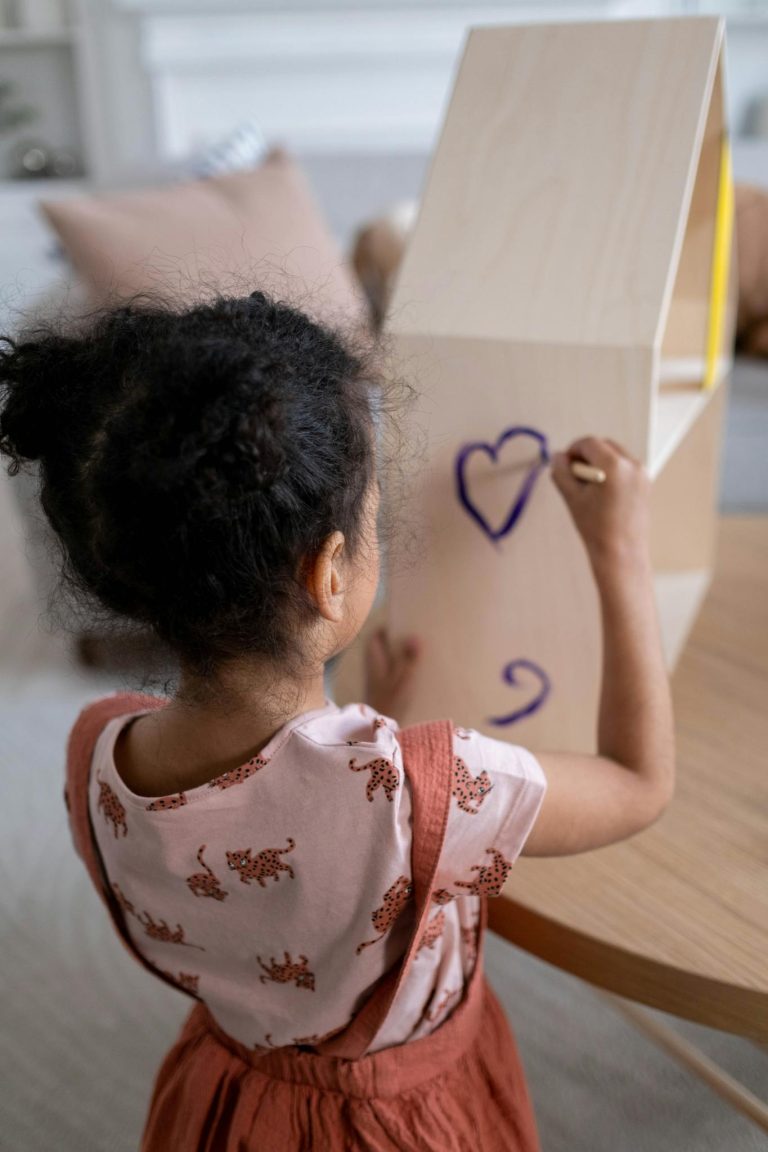
In today’s world, learning doesn’t have to come from textbooks or lectures – families can DIY learn together by tackling fun projects at home. If you’re looking for a way to teach your kids practical knowledge while also enjoying quality time, consider starting a weekly family DIY project night. By learning through doing, children absorb lessons more effectively than by just reading about them. In fact, studies show that kids engaged in hands-on activities are more likely to remember what they learn.
These DIY learning nights turn an ordinary evening into an adventure. Instead of each person drifting to their own screen, the whole family comes together to build, create, or explore something new. This not only helps children pick up real-world skills, it also strengthens family bonds. For an easy art‑based start, try creating a nature collage using leaves and flowers or explore our collaborative art projects for families to get everyone involved in one large artwork.
Key Points:
A weekly Family DIY Learning Night turns hands-on projects into fun, memorable learning experiences. Kids build real-world skills like problem-solving, creativity and confidence while families bond through cooking, crafts, science experiments or building projects. It’s an easy tradition that makes learning active, engaging and meaningful.
The Idea: Family DIY Learning Night
The concept is simple: set aside one evening each week (or twice a month) as your “Family Project Night.” During this time, everyone collaborates on a DIY activity that is both enjoyable and educational. Think of it as a workshop at home. You might call it Maker Monday, DIY Friday, or any name that sticks.
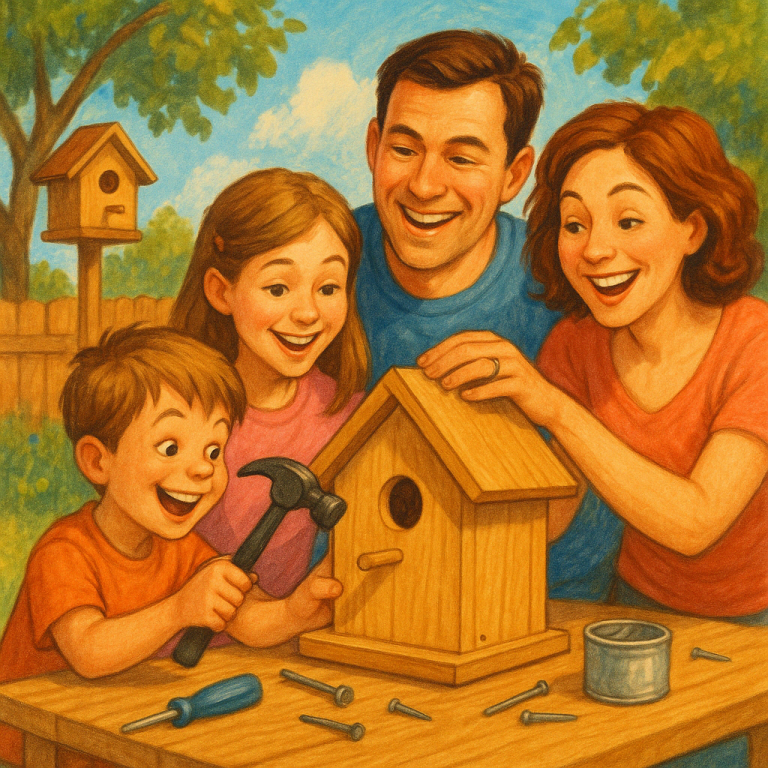
Making it a regular ritual gives everyone something to look forward to. One week you might all be scientists doing a kitchen experiment; the next week you’re builders constructing a birdhouse or chefs cooking a new recipe. Over time, “DIY learn night” becomes a normal part of family life – a time to unplug, team up, and get creative together.
To keep things fresh, rotate the types of projects and even the “project leader.” Perhaps one week the kids decide the activity (with guidance from the adults), and the next week the parents introduce a skill they want to pass on. This way, everyone gets a say and a chance to both learn and teach.
Why Hands-On Learning Is So Effective
There’s a reason educators praise hands-on learning: when kids learn by doing – whether it’s baking a cake or coding a robot – they gain a deeper understanding than through passive learning. Engaging their hands and minds keeps them interested and helps lessons stick.
Beyond school subjects, DIY projects teach practical life skills that benefit children in the long run. A simple family project night can foster a variety of abilities:
- Problem-Solving: When a plan or recipe goes wrong, kids learn how to troubleshoot and improvise solutions.
- Creativity: Building or crafting encourages imagination. Children learn to think outside the box when designing or decorating projects.
- Math & Science: Many activities involve measuring, counting, or observing science in action. For example, cooking uses math (measuring and budgeting ingredients) and science (how heat or mixing causes changes).
- Perseverance: Not every project goes perfectly. DIY nights show that mistakes are OK and part of learning – if the birdhouse collapses, you figure out why, laugh, and try again.
One of the biggest benefits is confidence. Successfully finishing a project – say, a handcrafted bird feeder – gives kids a sense of accomplishment. They think, “Wow, we made that ourselves!” That confidence can spark a lifelong love of learning new skills.
And let’s not forget the bonding factor. Working on engaging activities together creates “special bonding time” and a chance to face challenges as a team. Often, everyone will be chatting, laughing, and cheering each other on during these projects.
Getting Started: How to Organize Your DIY Learn Night
Ready to establish your own DIY learning tradition? Here are some tips to get going:
- Pick a Consistent Night: Choose a night that works for everyone (say, Friday after dinner or Sunday afternoon) and mark it on the calendar so all family members know it’s coming.
- Plan Ahead: Brainstorm a list of projects together and gather needed materials beforehand. When project night arrives, you can jump right in without scrambling for supplies.
- Keep It Age-Appropriate: Pick activities where each child can participate. Give younger kids simple jobs (stirring, painting, fetching tools) and let older kids handle more complex tasks (measuring, cutting with supervision, reading instructions).
- Set Up Your Space: Prepare a project area – like the kitchen table with a drop cloth or the garage workbench – where it’s okay to make a mess. A ready workspace makes the experience feel special.
- Be Flexible and Have Fun: It’s okay if things don’t turn out perfectly. The goal is to learn and enjoy time together. If the DIY bath bombs crumble or the homemade boat sinks, laugh and talk about what to try next time.
Project Ideas to Try as a Family
Need inspiration for your DIY learn night? Here are a few ideas with the skills they can teach:
- Cook a New Recipe: Make homemade pizza, bake pretzels, or whip up cookies. Skills: Measuring ingredients (math), following instructions, basic cooking techniques and safety.
- Build Something: Construct a birdhouse, a simple bookshelf, or a cardboard fort. Skills: Using basic tools safely, reading a simple plan, measuring (math), patience during assembly.
- Science Experiment: Erupt a baking soda volcano, launch a bottle rocket (see our jar‑based science experiments for instructions), or make slime. Skills: Scientific process (hypothesis and observation), chemistry/physics concepts, curiosity.
- Gardening Project: Plant herb seeds in pots or start a small veggie patch. Skills: Responsibility (watering, tending plants), understanding plant life cycles and where food comes from, patience.
- Create a nature collage or scrapbook – Gather leaves, pressed flowers and family photos to make a collage. See our step‑by‑step guide to nature collages for materials and techniques.
- Collaborative art project – Set up a big canvas or paper on the floor and let everyone paint different sections. Our collaborative art projects article has ideas for murals, mosaic collages and group sculptures.
Feel free to tailor projects to your family’s interests. The key is that everyone is actively involved and learning by doing.
Turning Learning into a Family Adventure
By dedicating time to DIY learn as a family, you’re showing your children that learning can happen anywhere – not just in a classroom. You’re also showing that parents can be learners too, trying new things alongside the kids and encouraging them to approach new challenges with curiosity rather than fear.
Keep in mind that the true “product” of family project night isn’t whatever item you make – it’s the experience you share and the skills gained along the way. The laughter, the problem-solving, and even the occasional mess-up are all part of the fun. Years down the road, your kids might not recall every detail of what you built or cooked, but they’ll remember the feeling of togetherness and accomplishment.
So grab a calendar, pick your first project, and get ready to DIY learn with your family. You’ll be building more than crafts or experiments – you’ll be building confident kids and lasting family bonds, one fun project at a time.
Quick FAQ
A Family DIY Learning Night is a weekly or monthly tradition where families pick a hands-on project—like cooking, building, science experiments or art—to learn and create together. It encourages teamwork, practical skill-building and quality screen-free time.
Hands-on projects help children retain information better because they learn through doing. DIY activities strengthen problem-solving, creativity, math, science, perseverance and confidence. Kids also learn essential life skills while bonding with family members.
Begin with simple activities such as cooking a new recipe, building a small birdhouse, trying a kitchen science experiment, planting herbs or making a nature collage. Choose projects where every family member can participate based on age and skill level.